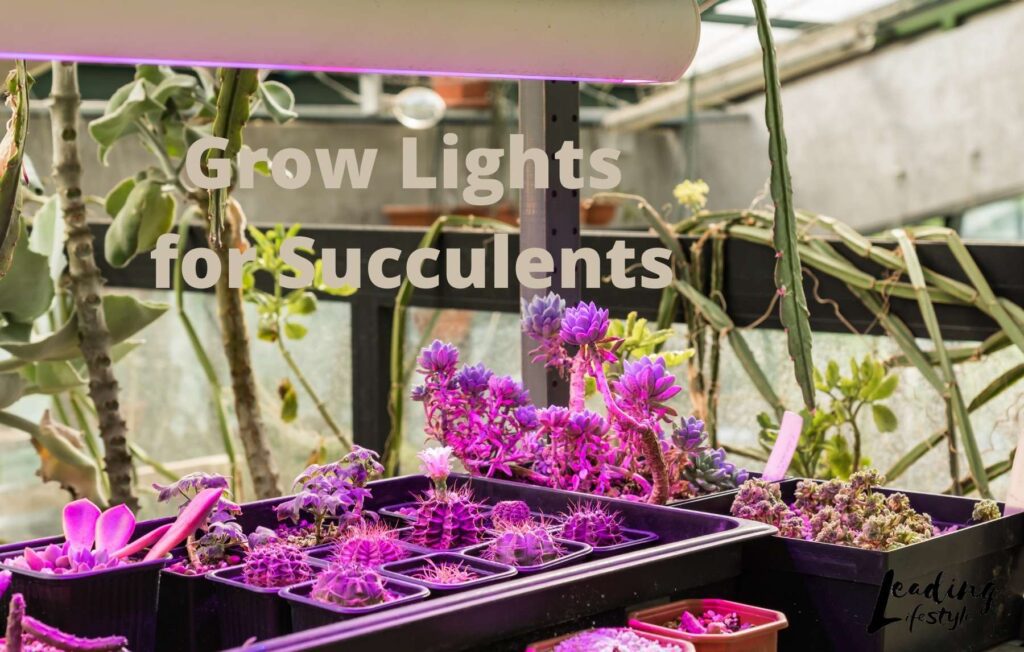
Do Indoor Succulents Need Grow Lights in Winter?
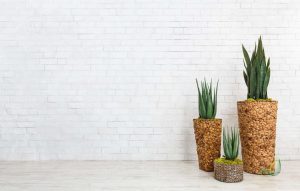
Succulents vary a lot in their light needs. Some, such as snake plants, tolerate very low light and will remain healthy even in darker corners. Most commonly grown succulents, though, do best with a clear amount of direct light: roughly 4 to 6 hours of direct sunlight a day is a useful baseline for many species. In winter that can be hard to get inside most homes. Days are shorter, the sun sits lower in the sky, and window orientation or nearby buildings and trees can cut the light your plants receive.
When succulents don’t get enough light they tend to stretch out, the rosettes open up, and colors fade — a process called etiolation. Etiolated plants are still alive, but they lose the compact, attractive form many people want. Many growers accept a bit of stretching over winter, trim and repot in spring, and the plants recover. Others want to keep their plants compact through the darker months; for those people grow lights are a practical, predictable way to maintain shape and color.
A grow light does not exactly replicate the sun, but it can supply enough usable light for photosynthesis and to prevent etiolation. full-spectrum grow lights are especially useful because they include the mix of wavelengths plants use across the visible range while also making the plants look natural to your eye. If your goal is to keep succulents tight and colorful indoors during winter, a grow light usually helps.
How Long Should Grow Lights Stay On?
Succulents have cycles of growth and rest. Outside, those cycles follow seasons. Indoors they still need a dark period every day to keep physiological rhythms working properly, but they also need adequate daily light to avoid stretching.
- The baseline many succulents want is about 6 hours of direct sunlight per day. That’s a practical rule of thumb you can use when deciding how much artificial light to substitute for natural sun.
- Under artificial light, aim for around 12-14 hours of light per day to mimic a full day plus a little buffer; this is a common recommendation for indoor plant setups because artificial light intensity is usually lower than bright outdoor sun and because daylight hours in many growing seasons are longer.
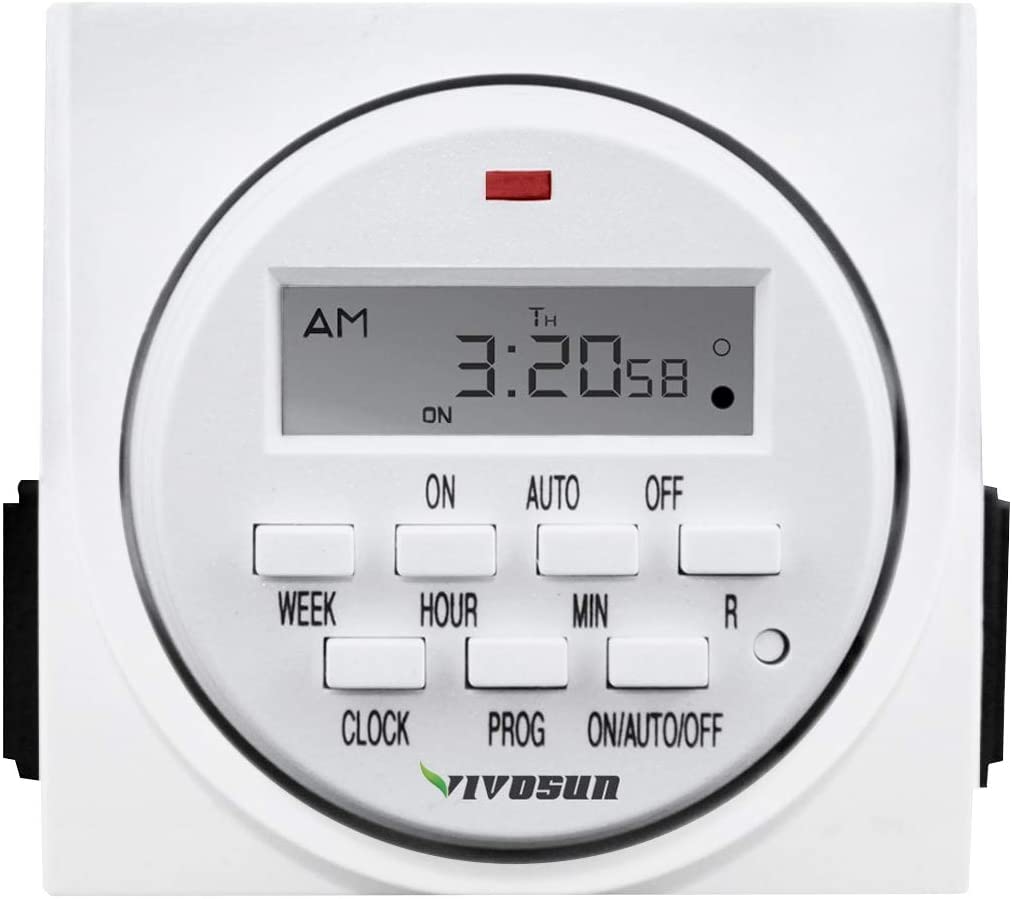
- Use a timer. A timer automates daily on/off cycles and keeps your plants on a consistent photo-period. Program the timer so plants get their light block and a stable dark period; adjust it across seasons if you want to mimic natural changes.
A few additional points about timing:
- If you want your succulents to enter a more dormant rhythm indoors, you need to manage both light and temperature. Simply shortening light without changing temperatures may not create a true dormancy.
- Watch how plants respond and adjust. If you see etiolation — stems lengthening and leaves spaced apart — increase hours or intensity. If you see bleaching, pale patches, or shriveling that suggest heat or light stress, dial back duration or move the fixture farther away.
- The timer also helps when you travel. Consistent daily cycles matter more than occasional variations.
Timers come in many forms: simple mechanical outlet timers, digital programmable timers with multiple on/off events per day, and smart Wi-Fi plugs you control from a phone. Any of these will keep the light schedule regular; the original post’s advice to use a timer is practical and still stands.
What Are Grow Lights?
Grow lights are lamps designed to emit wavelengths of light useful for plant photosynthesis and development. The purpose can be to approximate the sun’s photosynthetic spectrum or to emphasize specific wavelengths plants use, such as blue (for compact veg growth) and red (which influences flowering and stem elongation).
Two broad approaches exist in horticulture lighting:
- Provide a broad, balanced spectrum that approximates natural daylight across the visible range. The term full-spectrum often describes this approach. full-spectrum lights show plants in familiar tones and supply a mix of wavelengths for general health.
- Provide a narrow spectrum focused on the wavelengths plants use most for photosynthesis — commonly red and blue. Those lights can be efficient in a controlled environment but often produce a purple or magenta cast that makes it harder to judge plant color and condition at a glance.
Many people prefer full-spectrum white LEDs because they deliver usable light across the range plants use and make it easy to see and judge plants. full-spectrum white LEDs also tend to run cool, which reduces heat stress risks, and they’re energy efficient compared with older lamp types.
What sets grow lights apart from ordinary household bulbs is both spectrum and intensity. Typical household bulbs emphasize the warm, yellow-orange portion of the spectrum and aren’t tuned for horticulture. Grow lights are built to put more of the useful wavelengths where the plants can use them.
A practical advantage of full-spectrum white LEDs is that they let you assess color, spotting early signs of pests, rot, or nutrient issues more easily than the purple glow of some red/blue fixtures. If you’re aiming for a general indoor succulent display that looks natural and stays healthy, full-spectrum is a sensible choice.
What to Look for in a Grow Light
When choosing a grow light for succulents, focus on a few concrete measurements and features. Don’t rely on how the bulb looks next to your hand; read the specifications.
- Lumens and light output:
- Lumens measure visible light output and help estimate how bright a lamp will appear. The original guidance suggests roughly 300-800 lumens per square foot as a useful ballpark range for plant areas. Use lumen figures together with the coverage area to judge whether a fixture can serve your collection.
- Lumens alone don’t tell the whole story — spectral distribution matters — but they’re a practical start for home growers.
- Wattage and efficiency:
- Wattage shows how much electricity a lamp consumes. Efficiency is lumens per watt. A higher lumens-per-watt rating means more useful visible light for each unit of power you use. For long-term household use, choosing efficient fixtures reduces operating costs.
- Full-spectrum:
- The phrase full-spectrum appeared in the original post and is worth keeping: full-spectrum grow lights deliver a wider mix of wavelengths across the visible range. For most hobby succulent growers a full-spectrum white LED that provides balanced blue and red content, plus other wavelengths, supports healthy growth and makes the plants look natural.
- Color temperature (Kelvins):
- Color temperature is measured in Kelvins (K). The original piece noted a useful visual temperature range from 2200K to 7500K, and bulbs in the ~6,000K range usually support healthy growth. Practically:
- 2200K gives warmer, reddish light.
- 7500K gives cooler, bluer light.
- Many grow lights for general use sit around 3,000K-6,000K; a mid-range around 6,000K supports leaf development without being too blue.
- Succulents are generally forgiving across that range, but different color temperatures can subtly influence growth patterns.
- Heat and mounting:
- Consider how hot the fixture runs and whether you can place it at the needed distance. LEDs tend to emit little radiant heat compared with HID or some older fittings, which makes placement closer to plants safer.
- Form factor and adjustability:
- Think about how you’ll mount and position the light. Adjustable gooseneck fixtures or suspended panels with adjustable height make it easier to tune intensity by distance.
- Practical coverage:
- Match the lamp’s specified coverage area to your table, shelf, or tray. Overlapping coverage from multiple fixtures is fine for larger collections but check that the center-to-edge intensity won’t leave plants underlit at the edges.
A clear approach is to pick a full-spectrum LED sized for the number of pots you plan to keep under it, check lumens per square foot for coverage, confirm reasonable lumens per watt for efficiency, and choose a Kelvin in the 3,000K-6,000K range unless you have a specific reason to do otherwise. Remember the useful ends of the spectrum noted earlier: 2200K and 7500K define the extremes, with ~6,000K being a practical middle ground for many succulents.
Types of Grow Lights
There are three main types of grow light technologies you’ll encounter. Each has strengths and tradeoffs for a home succulent setup.
- LED (Light-Emitting Diodes)
- What they are: Solid-state lighting that can be engineered to emit full-spectrum white light or targeted red/blue blends.
- Good for: Home growers, small to medium collections, long life and low operating heat and energy use.
- Strengths: Energy efficient, long-lived, low heat so fixtures can sit nearer to plants. full-spectrum white LEDs promote healthy growth without producing an awkward purple hue.
- Tradeoffs: Upfront cost can be higher than a simple fluorescent tube, but lifetime cost is often lower.
- Fluorescent (T5 tubes and similar)
- What they are: Gas discharge lamps that produce a broad light useful for seedlings and close-up lighting.
- Good for: Seedlings, cuttings, and small racks where plants sit close under the tube.
- Strengths: Lower initial cost than some LEDs, cool running so tubes can be placed close to delicate seedlings.
- Tradeoffs: Shorter life than LEDs and lower energy efficiency; bulbs and fixtures need replacement more often.
- High-Intensity Discharge (HID) / Metal Halide
- What they are: High-output lamps used in commercial horticulture.
- Good for: Large, professional grows where maximum light output is required.
- Strengths: Very high light outputs and useful spectra for some growth phases.
- Tradeoffs: Generate significant heat, require ballasts and ventilation, and consume more power. Overkill for most hobby succulent collections.
Which to choose depends on scale and goals. For the majority of indoor succulent hobbyists, a full-spectrum white LED or a T5 fluorescent setup will be the simplest, lowest-heat, and lowest-maintenance solution.
The original post reviewed several product forms — small screw-in full-spectrum bulbs for single lamps, panel fixtures for wider coverage, thin hanging lights for a few medium plants, and T5 tube systems for seedling benches. Those are representative categories rather than endorsements of specific models. The same principles apply: match the light’s stated lumens and coverage to your planting area, prefer full-spectrum where you want natural-looking plants, and consider whether you want adjustable mounting or a fixed hanging kit.
How to Use a Grow Light on Succulents
A few straightforward rules make setups safer and more effective.
- Positioning and distance
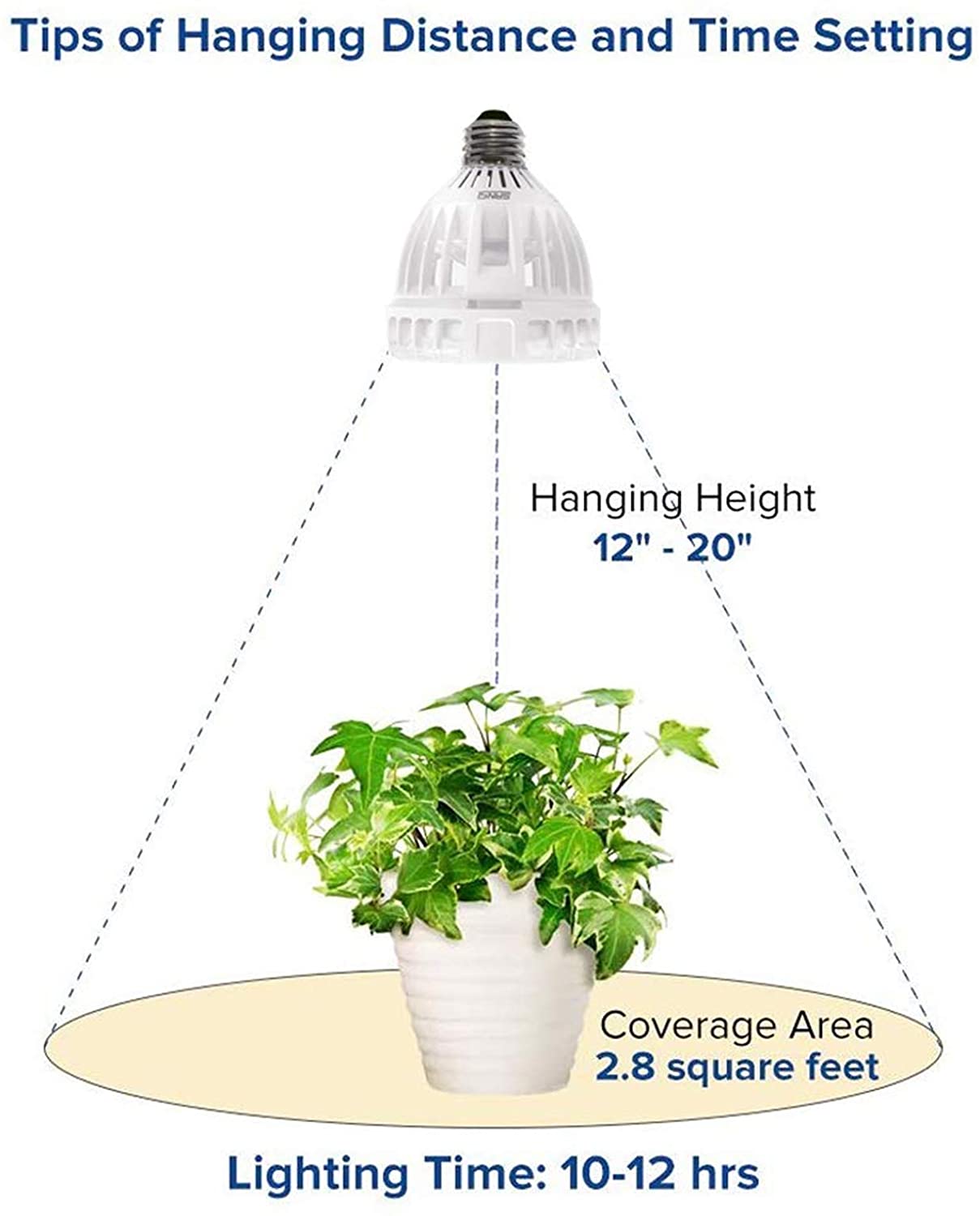
- Start with manufacturer guidance if provided. For small gooseneck fixtures, 18-24 inches from the canopy is a common starting point; for panel fixtures the distance can be higher depending on output.
- Closer increases intensity and can allow shorter daily hours; farther reduces intensity and may require longer photoperiods.
- Adjust the light height rather than forcing plants to move frequently. Gooseneck, adjustable brackets, or pulley systems make this easier.
- Duration and cycles
- Aim for about 12-14 hours of light under artificial conditions to approximate a full daylight period, keeping a predictable dark period every day.
- Use a timer so lights switch on and off at the same times daily. This maintains a consistent photoperiod and reduces guesswork.
- Signs of too little light
- Etiolation: stems elongate, spacing between leaves increases, rosettes open. Plants lean toward the light source.
- Loss of color or muted pigments that were strong under brighter conditions.
- Signs of too much light or heat
- Bleached or pale patches, scorched spots, leaf edges curling, or decline in tissue that indicates burning.
- If the plant surface feels warm to the touch when the light is on, increase distance or reduce hours.
- How to transition plants to stronger light
- Bring plants to stronger light gradually over days to weeks. Sudden exposure from a dim window to a powerful lamp or bright outdoor sun can cause burns.
- For plants that overwintered inside and will move outdoors in spring, harden them gradually by increasing outdoor exposure each day.
- Rotation and spacing
- Rotate plants weekly so each side receives similar exposure. This prevents one-sided growth.
- Leave space between pots for even airflow and to limit shading.
- Watering adjustments
- Keep in mind that higher light levels increase water use. Plants under stronger light dry faster; those in low light need less frequent watering. For watering frequency guidance, see our watering guide
- Practical maintenance
- Clean dust off fixtures and leaves so light reaches the canopy efficiently.
- Replace bulbs or tubes to manufacturer recommendations so spectrum and output remain stable.
These straightforward practices keep plants compact and reduce surprises. Monitor plants visually and adjust light duration and distance rather than trying to force the plant to meet a fixed schedule that gives poor results.
Other Useful Gadgets for Indoor Growing
A few basic accessories improve outcomes and reduce hassle.
- Timer outlet
- A simple outlet timer automates on/off cycles and is the easiest way to keep a consistent photoperiod. Program it for the same daily window every day; seasonal changes are simple to implement by adjusting the timer.
- Clip fan (small oscillating or clip-on fan)
- Good air movement reduces stagnant pockets of humidity, which helps prevent pests and fungal problems. Clip fans are inexpensive, mount easily, and can be aimed gently across a shelf or table.
- Adjustable mounting hardware
- Simple chains and carabiners, a pulley/hanger system, or an adjustable desk lamp allow you to change fixture height without tools. These are especially useful if you run seedlings or cuttings at different heights or if you want to move the light closer during growth spurts.
- 70% isopropyl alcohol in a spray bottle
- A basic, widely available remedy for many small insect pests. Spray the plant, including between leaves, and repeat daily until pests are gone. Use sparingly and avoid heavy drenching of soil. Test a small area first if you are worried about sensitivity.
- Reflective surfaces or mirrors (used carefully)
- Positioning plants near a reflective surface such as a glass-backed shelf or a well-placed mirror can increase available light from a lamp, but reflections are not a substitute for direct overhead light; they simply reduce loss from side radiation.
- Hygrometer/thermometer
- A small gauge helps you monitor leaf-level temperatures and humidity. Many succulent problems relate to the combination of light and temperature rather than light alone.
These are simple, practical tools rather than expensive extras. For most people a timer, a gentle clip fan, and a spray bottle of isopropyl alcohol cover the most common needs.
Bottom Line
You do not have to buy grow lights for every succulent during winter. If you have a bright window giving roughly 4-6 hours of direct sun many succulents will manage through the shorter days. If you lack that light and want to keep plants compact and colorful, a grow light — preferably a full-spectrum LED — is a low-heat, energy-efficient way to supply usable light indoors.
Key takeaways to put this into practice:
- Use 12-14 hours of artificial light per day as a starting point, with a daily dark period. A simple timer automates this.
- Aim for full-spectrum white LEDs when you want plants to look natural and you want a balanced mix of wavelengths. Keep in mind the stated visual color temperature extremes of 2200K and 7500K; bulbs around 3,000K-6,000K (often near ~6,000K) are practical for healthy leaf development.
- Watch your plants: etiolation means increase light or duration; bleaching or scorching means reduce intensity or increase distance.
- Match lumens and coverage to your planting area (the original guidance suggested 300-800 lumens per square foot as a ballpark) and prefer efficient fixtures with good lumens per watt.
- Small extras — an outlet timer, a clip fan for airflow, and a spray bottle of 70% isopropyl alcohol for pests — simplify maintenance and reduce problems.
If you prefer not to add equipment, choose lower-light succulents and accept some winter stretching you can trim and correct in spring.